


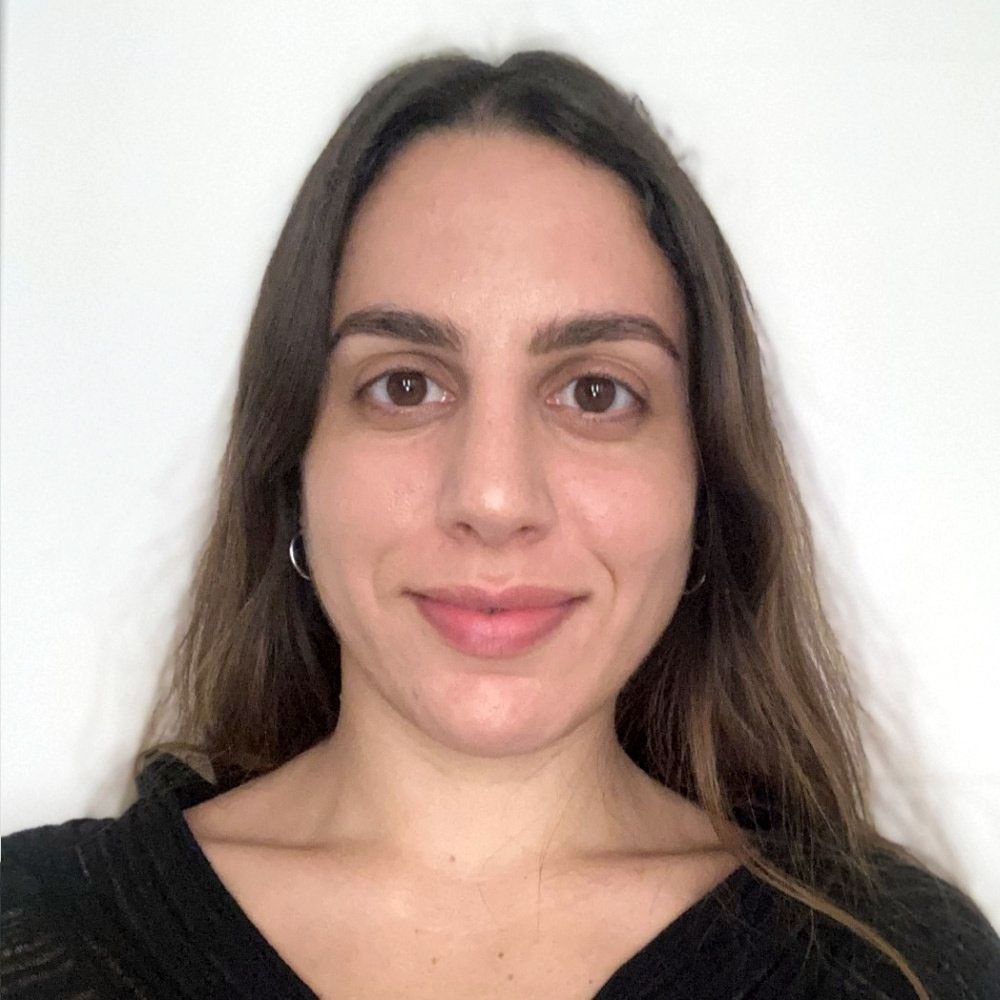
Who
Dr. Sofia Botsi
NASA Jet Propulsion Laboratory
When
22 Jul 2026, 11:00 Athens time, Science Building 145Π58
Title
Quantum Physics with Emphasis on Photonic Quantum Computers and Quantum Simulators
Abstract
Quantum simulations use highly controllable quantum systems (such as neutral atoms and molecules, photons, ions, superconducting circuits, …) to mimic the behavior of more complex quantum systems that classical computers cannot compute due to exponential scaling of quantum states and quantum operations. Ultracold neutral atoms and dipolar molecules provide an exceptional platform for quantum simulations because they offer long coherence times, tunable interactions, reconfigurable geometries, and the ability to implement both analog and digital Hamiltonians with high precision. When cooling atoms to temperatures within a millionth of a degree of absolute zero, they form exotic quantum states such as Bose-Einstein Condensates (BECs). Researchers create and utilize BECs on ground and more recently in space for fundamental physics investigations. This presentation provides an overview of the scientific foundations of ultracold‑atom–based quantum simulations, including experimental advances in creating controllable atomic and molecular qubits, theoretical modeling of interaction potentials, and the emerging role of neutral-atom platforms in next-generation ground- and space-based quantum technologies, while outlining future research directions and opportunities for growth within the broader quantum ecosystem.
About the Speaker
Dr. Sofia Botsi is the Engineering Model Testbed Lead of NASA's Cold Atom Lab mission onboard the ISS. She is responsible for the operation, maintenance, and testing of experiments with the ground instrument prior to execution on flight. She is leading the optical dipole trap study, which may be delivered as an upgrade during a future resupply of the science instrument in orbit, and she is also a Co-Investigator on the Feshbach molecules in microgravity study. Her research interests include high-precision measurements, quantum simulations, and quantum computations with ultracold atomic and molecular gases. She joined JPL as a Postdoctoral Fellow in 2023 after receiving her Ph.D. from the National University of Singapore and her M.Sc. from the Max Planck Institute for Nuclear Physics at Heidelberg University.

