

At the international conference on Statistical Physics ΣΦ 2026, held in Kolymbari, Chania, researchers from the Technical University of Crete presented recent cutting‑edge work in the fields of statistical physics and machine learning.
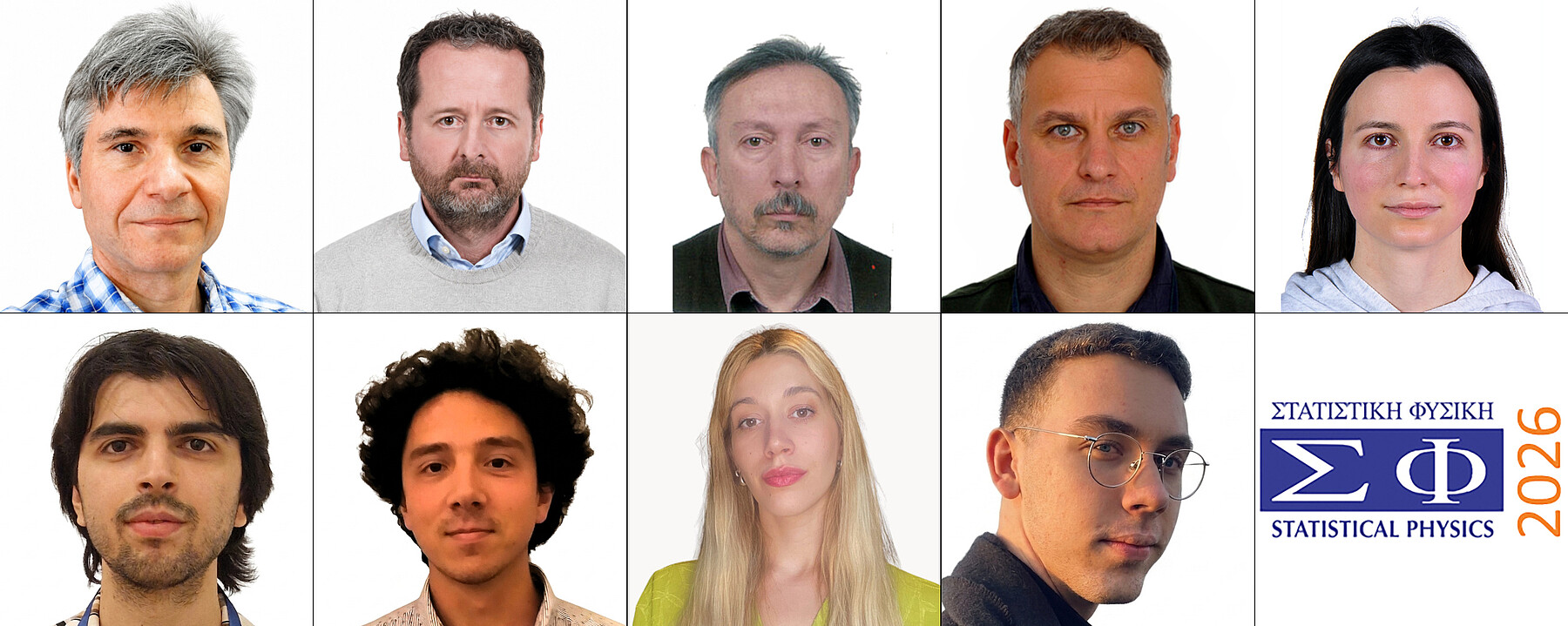
The School of Electrical and Computer Engineering was represented by Professor Dionissios Hristopulos and former Professor Dimosthenis Ellinas (members of the Conference’s Organizing Committee), ECE PhD candidates Nikolaos Paraskakis and Konstantinos Bekos, as well as ECE graduate Konstantinos Grammenos. Also participating were Sofia Nerantzaki (EDIP, School of Mineral Resources Engineering) and Maria Koltsidopoulou (ECE graduate, PhD candidate in Mineral Resources Engineering).
The presentations covered innovative machine‑learning methodologies, modern approaches in statistical physics, and applications in critical domains such as:
- Climate change — modeling and forecasting extreme events
- Space weather — analysis of solar activity and its impacts
- Spatiotemporal modeling — from environmental pollution data to porous media structure
- Brain activity — statistical and neural models for understanding brain function
A significant part of the work originates from the research project SLIMNETS, funded by H.F.R.I. (ELIDEK), with contributors: Dionisis Hristopulos, Nikolaos Paraskakis, Konstantinos Bekos, Thanasis Liavas, Manolis Varouhakis, and Sofia Nerantzaki.
The participation of the Technical University of Crete in the conference was covered by the newspaper Chaniotika Nea in its Wednesday, 8 July 2026 issue, in an article titled: “Innovative technologies in the ‘battle’ against the climate crisis – Reports from an international conference in Chania.”

